listicle
Best Beauty Tech for Dark Skin Tones: 2026 Picks
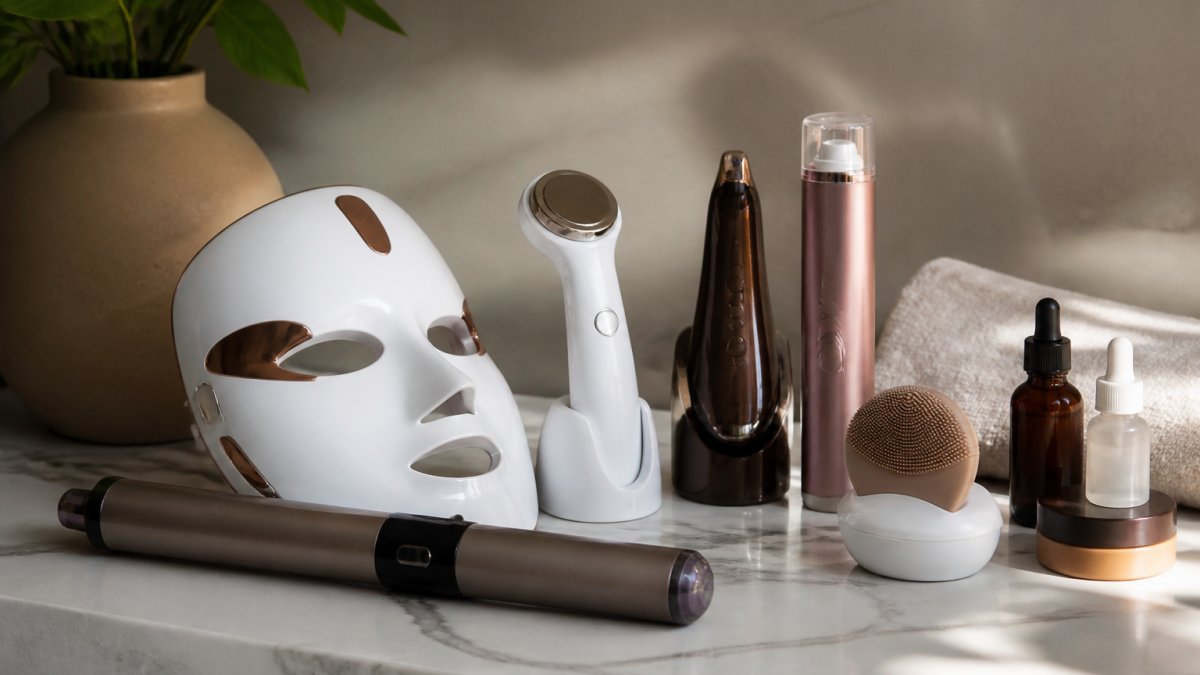
Last Updated: October 25, 2026
Quick Summary
The best beauty tech for dark skin tones prioritizes safety over power: LED red light masks are low-risk, the NuFACE Trinity+ ($395) is the top microcurrent pick, and professional Nd:YAG laser beats at-home IPL. Check for FDA clearance, named wavelengths, and written guidance for melanin-rich skin before buying.
- The NuFACE Trinity+ microcurrent device costs $395, with replacement gel as an ongoing cost.
- Start LED sessions with red or near-infrared light at low fluence and add blue light sparingly.
- At-home IPL can read skin melanin as a target, so demand a skin-tone chart and working sensor.
- Professional Nd:YAG laser at 1064 nm is generally the safer hair removal route for deeper tones.
- Limit exfoliating tools like gua sha and cleansing brushes to two or three sessions a week.
Table of Contents
- What Makes Beauty Tech Different for Dark Skin Tones
- Our Top Picks at a Glance
- Microcurrent Facial Device for Dark Skin: Toning Without the Guesswork
- LED Light Therapy for Dark Skin: Red, Blue, and What the Evidence Says
- Laser Hair Removal for Dark Skin Tones: What Works and What to Avoid
- IPL Hair Removal Dark Skin Safety: The Questions to Ask First
- Gua Sha, Rollers, and Cleansing Tools: Low-Risk Additions to Your Routine
- How to Choose Your Beauty Tech Setup With Let's Elevate Enterprises LLC
- Frequently Asked Questions
What Makes Beauty Tech Different for Dark Skin Tones
Beauty tech for dark skin tones demands more caution than the average gadget review admits. Melanin-rich skin carries a higher risk of post-inflammatory hyperpigmentation, and devices that run too hot or deliver uneven energy can leave dark marks that outlast the treatment's benefits.
At Let's Elevate Enterprises LLC, we curate luxury lifestyle tools and provide deep-dive reports, offering carefully selected products designed to enhance daily experiences and foster personal development.
Our Top Picks at a Glance
Here is the shortlist, organized by what each device type does best for deeper skin.
| Device | Type | Best For | Price Signal |
|---|---|---|---|
| NuFACE Trinity+ | Microcurrent | Facial toning and contouring | $395 |
| LED red light masks | LED light therapy | Low-irritation glow and texture | Varies by model |
| Lumi Visage 7-Color LED Mask | LED light therapy | Multi-mode at-home sessions | Not stated |
| Gua sha and facial rollers | Manual tools | Puffiness and product absorption | Low entry cost |
| Laser hair removal | Professional | Long-term hair reduction | Clinic pricing varies |
For a wider sweep of home devices beyond skincare, our guide to the best high tech home wellness gadgets covers sleep, recovery, and stress tools worth comparing.
Microcurrent Facial Device for Dark Skin: Toning Without the Guesswork
A microcurrent facial device for dark skin works by sending low-level electrical currents through facial muscles to encourage a lifted, toned appearance. The technology itself is tone-agnostic, but the conductive gel matters: some formulas irritate sensitive skin, and irritation is the enemy when you are managing pigmentation risk.
NuFACE Trinity+: The Editor-Favorite Pick
The NuFACE Trinity+ is the most consistently recommended at-home microcurrent device, priced at $395, and a comparison focused specifically on Black skin named it the best overall option (CurlyNikki microcurrent comparison). It earns that spot for consistent output and a straightforward routine.
The catch: replacement activator gel is an ongoing cost, so budget beyond the initial purchase.

What to Check Before You Buy
Before any microcurrent purchase, run this checklist:
- Is the device FDA-cleared for home use?
- Does the brand publish guidance for sensitive or melanin-rich skin?
- Is the conductive gel fragrance-free?
Watch out: skipping the gel or using a substitute can cause micro-irritation that shows up as dark marks on deeper skin. Our broader beauty tech and lifestyle resources cover how to build a routine around a single device instead of five.
LED Light Therapy for Dark Skin: Red, Blue, and What the Evidence Says
LED light therapy for dark skin is generally considered low-risk because it uses non-thermal light rather than heat or ablation.
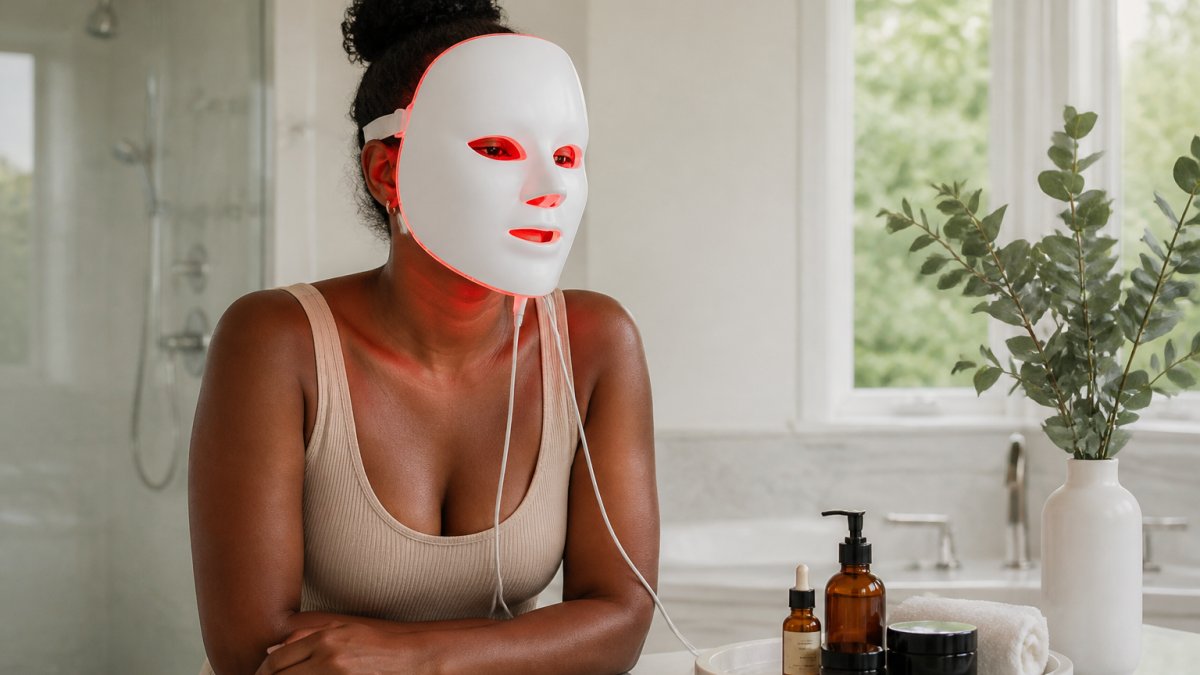
But 'low-risk' is not the same as 'no-risk,' and the difference matters more on melanin-rich skin. Here is the mechanism-level breakdown most roundups skip.
What the wavelengths actually do
- Red light (roughly 630-660 nm) penetrates to the dermis and is studied for collagen support, texture, and fine lines. It is the mode with the most at-home evidence and the lowest irritation profile.
- Near-infrared (roughly 810-850 nm) goes deeper and is often paired with red for firmness and recovery. It is invisible, so you cannot judge dose by brightness.
- Blue light (roughly 415 nm) targets acne-causing bacteria on the surface. It is the mode most likely to dry or sting sensitive skin, and it is the one to introduce most slowly.
Why melanin changes the calculus
LED is non-ablative, so it does not burn pigment the way lasers can. The real risks on deeper skin are indirect:
- Heat buildup. Higher-fluence masks and long sessions can warm the skin. On melanin-rich skin, sustained heat is a known trigger for post-inflammatory hyperpigmentation (PIH), so shorter sessions at lower settings are the safer starting point.
- Irritation from fit and straps. A mask that presses or chafes creates low-grade inflammation, and inflammation is what drives dark marks. Fit matters as much as wavelength.
- Blue-light overuse. Daily blue-light sessions on sensitive skin can cause dryness and redness that cascade into pigmentation. Most practitioners suggest alternating modes rather than stacking them.
What to look for on the spec sheet
- Named wavelengths, not just 'red' and 'blue.' A credible brand publishes nm ranges.
- Adjustable fluence or intensity, so you can start low.
- FDA clearance for home use (Class II for most LED masks).
Lumi Visage 7-Color LED Mask and Similar Devices
The Lumi Visage 7-Color LED Mask offers multiple color modes in one unit, which suits buyers who want variety without buying several masks. The trade-off with multi-mode masks is that specs and tone-specific guidance are often thin, ask the brand directly for wavelength ranges, fluence, and whether the device has been tested on deeper skin tones before committing. 'Tested on darker skin' and 'safe for all skin tones' are not the same claim, and a good brand will tell you which one it can actually support.
If you are weighing masks seriously, our roundup of the best red light therapy masks compares wavelengths, fit, safety, and value side by side.
Laser Hair Removal for Dark Skin Tones: What Works and What to Avoid
Laser hair removal for dark skin tones works best with devices that target the follicle while bypassing melanin in the surrounding skin. Nd:YAG lasers are the standard choice for deeper tones because their longer wavelength skips surface pigment.
The wrong laser, or an inexperienced operator, can cause burns and lasting pigmentation changes. Ask which laser is being used, what setting, and whether the clinic has treated your skin tone before. Patch tests are not optional.
IPL Hair Removal Dark Skin Safety: The Questions to Ask First
IPL hair removal dark skin safety is the single biggest trap in at-home devices. Intense pulsed light targets pigment broadly, which means it can read melanin in the skin as a target, not just the hair. That is not a marketing caveat, it is the core mechanism, and it is why the Fitzpatrick scale appears on every IPL box.
Why IPL is riskier on deeper skin
IPL fires a broad spectrum of light (roughly 500-1200 nm) at the skin. The melanin in hair absorbs that energy and heats the follicle. But melanin in the surrounding skin absorbs the same light.
This is why many at-home IPL manufacturers publish a skin-tone chart and explicitly exclude deeper Fitzpatrick types (often IV-VI, depending on the device). If a brand does not publish that chart, that is itself the answer.
The questions that actually matter
- Does the manufacturer explicitly list your skin tone as suitable, in writing, on the device page or in the manual? 'Safe for all skin tones' without a tone chart is a red flag, not a reassurance.
- Does the device have a built-in skin sensor that blocks unsafe settings? A real sensor reads skin tone at the treatment site and refuses to fire if the setting is unsafe. Ask whether it is active on every level or only the highest.
- What is the lowest energy setting, and is it adjustable in small increments? Coarse jumps between levels leave no safe starting point for sensitive or deeper skin.
- Has the brand published guidance specifically for deeper tones, not just a general FAQ? Look for a dedicated page, a tone chart, or a support team that will answer in writing.
- What is the return window, and does it cover use? If irritation appears in week one, you want a return path that does not require an unopened box.
At-home IPL vs. professional laser for dark skin
For deeper skin tones, professional laser hair removal with an Nd:YAG laser (1064 nm) is generally the safer route because its longer wavelength bypasses surface melanin and targets the follicle more selectively.
Ask the clinic three things before booking: which laser platform they use, whether the operator has treated your skin tone before, and whether a patch test is included. A clinic that hesitates on any of those is not the right clinic.
When to stop and see a dermatologist
Stop treatment and seek professional advice if you see blistering, crusting, prolonged redness beyond a few hours, or any new dark mark that appears in the treated area. These are the warning signs generic device roundups tend to omit, and on melanin-rich skin, early intervention is what prevents a temporary reaction from becoming a long-term pigment issue.
Gua Sha, Rollers, and Cleansing Tools: Low-Risk Additions to Your Routine
Manual tools carry the least risk for melanin-rich skin, which makes them a sensible starting point. Gua sha and facial rollers support lymphatic drainage and reduce morning puffiness; cleansing brushes handle texture and exfoliation when used gently.
The rule with any exfoliating tool: pressure and frequency cause more damage than the tool itself. Our guide on how to simplify your beauty routine shows how to fit these tools into a routine without overbuying.
How to Choose Your Beauty Tech Setup With Let's Elevate Enterprises LLC
Choosing beauty tech for dark skin tones comes down to three filters: proven safety for your tone, a clear ongoing cost, and a device you will actually use weekly.
We built Let's Elevate Enterprises LLC around that logic. Our curation focuses on beauty technology, deep-dive reports that explain what a device does and does not do, and lifestyle tools that support intentional self-growth rather than impulse buying.
Explore the full collection and the reports behind each pick at Let's Elevate Enterprises LLC.
Frequently Asked Questions
Which at-home beauty devices are safe for dark skin tones?
LED light therapy masks, microcurrent devices, gua sha, facial rollers, and cleansing brushes are generally the lowest-risk categories for melanin-rich skin because they don't rely on heat or light absorption by pigment. The Quality Edit notes LED red light masks suit both light and dark skin tones. Laser and IPL devices carry higher post-inflammatory hyperpigmentation risk and should be chosen with a dermatologist's input. Always patch-test and start on the lowest setting.
Can people with dark skin use IPL hair-removal devices?
IPL safety for dark skin depends on the device's technology and your specific skin tone. Traditional IPL targets melanin, so it can burn darker skin or trigger hyperpigmentation when the device can't distinguish hair pigment from skin pigment. Some newer devices claim tone-sensing technology, but the research here does not verify those claims for deep skin tones. Check the manufacturer's skin-tone chart, patch-test on a small area, and consult a dermatologist before regular use.
Are microcurrent devices suitable for dark skin?
Yes. Microcurrent facial devices like the NuFACE Trinity+ work by delivering low-level electrical current to facial muscles and do not depend on melanin absorption, so skin tone is not a barrier. The CurlyNikki comparison specifically evaluates at-home microcurrent devices for Black skin and names the NuFACE Trinity+ ($395) as its best overall pick. Note that replacement activator gel adds an ongoing cost. Skip microcurrent if you have a pacemaker or are pregnant unless a doctor approves.
How can I reduce the risk of burns or hyperpigmentation when using beauty tech?
Start every new device on its lowest setting and patch-test on your jawline or inner arm for 48 hours. Avoid heat-based and light-based tools on tanned or recently exfoliated skin. Follow the manufacturer's treatment frequency exactly, since overuse is a common cause of irritation. Stop immediately if you see redness that lasts more than an hour, and photograph your skin weekly so you can spot early pigment changes. For laser and IPL, book a consultation with a dermatologist familiar with melanin-rich skin first.
Should I consult a dermatologist before using an at-home skin device?
For LED masks, microcurrent, gua sha, and cleansing brushes, a dermatologist visit is helpful but not mandatory. For laser hair removal, IPL, radiofrequency, and any device that delivers heat or intense light, a consultation is strongly advised. A dermatologist can assess your Fitzpatrick skin type, flag active acne or melasma that devices could worsen, and confirm which treatment settings are appropriate. If you have a history of keloids or post-inflammatory hyperpigmentation, book the appointment before you buy.
The beauty tech market rarely tests devices across the full range of skin tones, which leaves you doing the diligence. We do that work before a product reaches our shelves. Get started with Let's Elevate Enterprises LLC and build a beauty tech setup chosen for your skin, your routine, and your budget.
