blog
Best Red Light Therapy Masks: 7 Top Picks for 2026
Table of Contents
- What to Look For When Choosing the Best Red Light Therapy Masks
- The Best LED Face Masks by Skin Concern
- Omnilux vs Shark LED Mask: How the Two Heavyweights Compare
- How Often to Use a Red Light Therapy Mask for Real Results
- Red Light Therapy Mask Safety: Contraindications and Eye Protection
- Total Cost of Ownership: What the Price Tag Doesn't Tell You
- Common Mistakes That Undermine Results
- Conclusion
- Frequently Asked Questions
Last Updated: October 19, 2026
What to Look For When Choosing the Best Red Light Therapy Masks
The best red light therapy masks are not the ones with the flashiest marketing. They are the ones whose published wavelengths, stated irradiance, and physical fit match your face and your skin goals. This guide from Let's Elevate Enterprises LLC cuts through the noise.
Here is the uncomfortable truth: two masks can look identical on a product page and perform nothing alike. One publishes its wavelengths and power output. The other hides behind vague claims about "clinical-grade light." That difference matters more than brand name or price.
Below, we break down the specs that actually decide results, compare the two names everyone asks about, and explain how often to use a red light therapy mask so you are not wasting sessions.
Wavelengths and Irradiance: The Specs That Actually Matter
Wavelength is the color of the light measured in nanometers, and it determines how deep the light penetrates skin. Irradiance is the power delivered per unit area, usually stated in mW/cm².
Red light typically sits around 630-660 nm and works on the surface layers. Near-infrared light sits around 810-850 nm and reaches deeper tissue. A mask covering both ranges gives you more flexibility than a single-wavelength device.
Irradiance is where cheap devices quietly fail. A mask that takes 20 minutes to deliver what a stronger device delivers in 10 is not gentler. It is weaker. Look for published irradiance figures, not just treatment time.
Fit, Coverage and Eye Safety
Coverage is the spec buyers underestimate most. A mask that leaves gaps at the jaw, temples, or under the eyes treats a smaller area than you think, and inconsistent contact means inconsistent light delivery.
Fit varies by face shape, and this is where reviews from people with your bone structure are worth more than star ratings. Flexible silicone shells conform better than rigid plastic. Adjustable straps keep the device in place during a 10-minute session.
Eye protection deserves its own line. Most masks include built-in shielding, but you should confirm it covers the eyes fully before use. Never stare into the LEDs.
The Best LED Face Masks by Skin Concern
The best LED face masks depend entirely on what you want the device to do, not on which one has the longest feature list. Match the device to your primary concern first, then compare everything else.
- Fine lines and firmness: prioritize red plus near-infrared coverage and consistent irradiance across the full face.
- Breakouts and oiliness: look for blue light modes, which target surface bacteria. Red and blue light combinations are common in multi-mode devices.
- Sensitivity and redness: fewer modes, lower irradiance settings, and a comfortable fit matter more than power.
- Full-face rejuvenation: dual-wavelength masks with even coverage from forehead to jaw.
A multi-mode mask sounds like better value. In practice, most people use one or two settings consistently. Buy for the mode you will actually run five nights a week.
Omnilux vs Shark LED Mask: How the Two Heavyweights Compare
The Omnilux vs Shark LED mask question comes up constantly, and the honest answer is that they target different buyers and publish different levels of technical detail. Omnilux built its reputation on clinical positioning and published wavelength data. Shark entered from consumer electronics, leaning on brand recognition, multiple modes, and approachable design. Neither is wrong, but you should compare them on the specs that decide results, not on the marketing.
Here is what each brand typically publishes, and what that means for your decision:
| Criterion | Omnilux (Contour and Men's lines) | Shark LED Mask (FlexStyle and CryoGlow lines) |
|---|---|---|
| Positioning | Clinical-led skincare brand | Consumer lifestyle brand |
| Wavelength focus | Red (~633 nm) and near-infrared (~830 nm) | Multi-mode, typically includes red, blue, and sometimes infrared |
| Published specs | Detailed wavelength and output data on product pages | Varies by model; check the current listing |
| Treatment time | Typically around 10 minutes per session | Varies by mode; often 10-15 minutes |
| Best for | Buyers who want documented specs and a single proven protocol | Buyers who want a familiar name and multiple modes |
| Fit style | Flexible, strap-secured | Rigid shell design |
Neither is wrong. If you want published technical detail and a protocol built around two well-studied wavelengths, lean Omnilux. If you want a well-known brand with multiple modes and a rigid shell that may suit some face shapes better, Shark fits. Check current pricing and specifications directly with each brand, since models change and the numbers on a review page go stale fast.
A note on evidence quality: both brands cite clinical research, but the strength of that evidence varies. Red and near-infrared light have the most published support for skin tone and texture over several weeks of consistent use. Blue light has narrower support, mainly for surface bacteria in acne-prone skin. Treat any brand's before-and-after gallery as marketing, not proof, and expect results to vary by skin type, adherence, and device output.
How Often to Use a Red Light Therapy Mask for Real Results
Most manufacturers recommend three to five sessions per week, with each session running roughly 10 minutes depending on the device's irradiance. Consistency beats intensity every time.
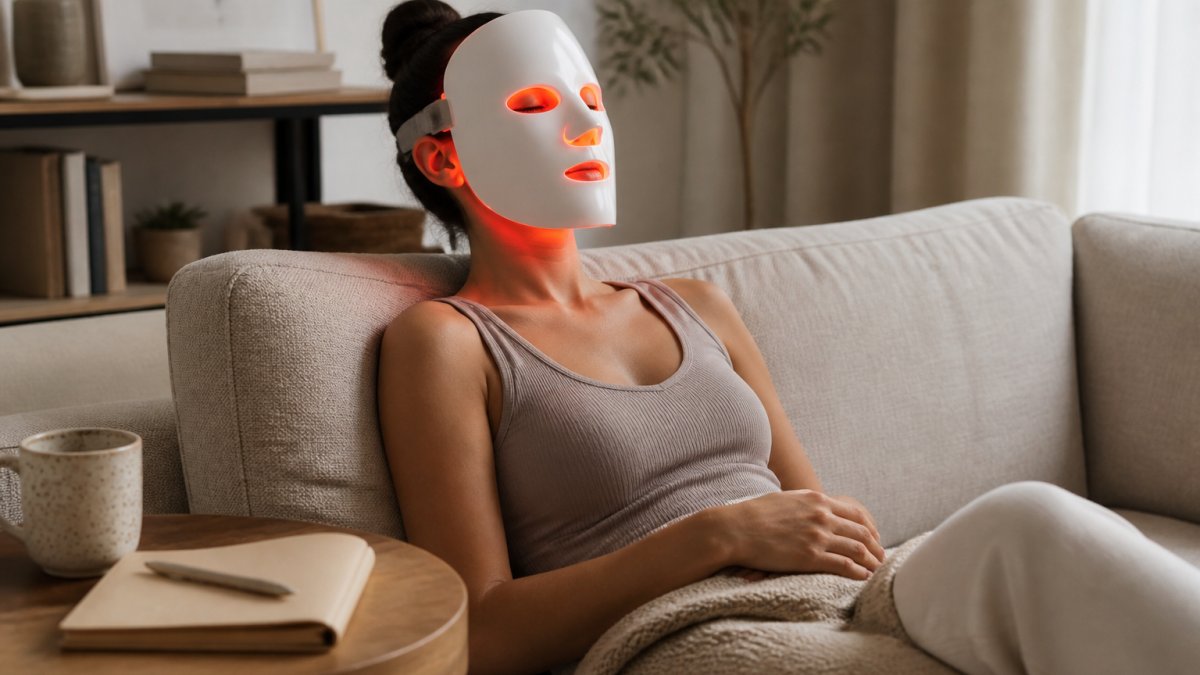
The mistake we see most is overuse. More sessions do not speed results, and daily use on sensitive skin often backfires. Start at three sessions weekly for four weeks, then adjust.
Track your progress with photos taken in the same lighting, same angle, same time of day. Weekly photos beat memory every time. Expect the first visible changes in skin tone and texture after several weeks, not days.
Clean the mask after every use. Buildup on the inner surface blocks light and irritates skin.
Red Light Therapy Mask Safety: Contraindications and Eye Protection
Red light therapy mask safety comes down to two things: protecting your eyes and knowing when to skip the device entirely. Both are covered in general FDA guidance on light-based devices and in dermatology literature, but the practical details are where most buyers get caught out.
Eye protection. Most masks include built-in shielding, but confirm it covers the eyes fully before use. Never stare into the LEDs, even briefly. If you have a diagnosed eye condition, including cataracts, glaucoma, or a history of retinal issues, ask your ophthalmologist before starting. Eye protection is not optional and not a marketing feature. It is the single safety step most often skipped.
Photosensitizing medications. Some common drugs increase your skin's sensitivity to light. A partial list includes certain antibiotics (tetracyclines such as doxycycline, and fluoroquinolones), isotretinoin and some other retinoids, certain diuretics, and some antidepressants and antipsychotics. This is not a complete list. Check the leaflet that comes with any prescription medication, or ask your pharmacist, before your first session.
When to skip the device or get medical clearance first:
- You take a photosensitizing medication such as certain antibiotics or retinoids
- You are pregnant, without checking with your doctor
- You have active skin infections, open wounds, or recent chemical peels
- You have a history of skin cancer or a condition affected by light
- You are using strong topical acids that increase sensitivity
- You have a diagnosed eye condition
A practical patch test. Run one short session on a small area of your inner forearm, then wait 24 hours. If you see redness, itching, or swelling beyond what fades within an hour, stop and consult a clinician. This is especially important with sensitive skin or when starting a new medication.
Realistic expectations. Light therapy supports collagen and skin tone over time. It does not replace professional treatments, and any brand promising otherwise is overselling. Results vary by skin type, adherence, and device output, so judge a device on published specs and a consistent routine, not on a before-and-after gallery.
Total Cost of Ownership: What the Price Tag Doesn't Tell You
The sticker price is only part of what a red light therapy mask costs you. A cheap device that underdelivers gets abandoned, and that is the most expensive outcome of all.
Factor in device lifespan, replacement straps, and whether the brand publishes its specifications so you can verify claims later. A mask with documented output and a solid warranty usually costs less per year of real use than a bargain model replaced twice.
Pricing for devices in our own curated collection depends on model and availability, so check our current listings for exact figures. For any device, compare the published irradiance and warranty side by side before you decide.
Common Mistakes That Undermine Results
The biggest mistake is inconsistency. A mask used twice a week for a month produces nothing, then gets blamed for not working. Sessions need to be regular for several months before you judge results.
Second: skipping the patch test. Run one short session on a small area first, especially with sensitive skin.
Third: expecting injectable-level results. Light therapy supports collagen and skin tone over time. It does not replace professional treatments, and any brand promising otherwise is overselling.
Fourth: buying without checking wavelength and irradiance. A beautiful device with no published specs is a gamble.
Conclusion
The right device comes down to published specs, honest fit, and a routine you will actually keep. That is the standard we hold at Let's Elevate Enterprises LLC when curating beauty tech.
We select devices with documented wavelengths, transparent irradiance figures, and comfortable full-face coverage. Our deep-dive reports explain what each specification means for your skin goals.
Start with our curated beauty tech collection and choose a mask that matches your skin concern, not the loudest marketing claim.
Frequently Asked Questions
Which red light masks really work?
The ones with clinically studied wavelengths, typically 630-660 nm red and 830-850 nm near-infrared, and enough irradiance to deliver a meaningful dose in a reasonable session. A mask with the right wavelengths but poor fit leaves gaps around the nose, chin and jaw, so coverage matters as much as specs. Look for FDA-cleared devices, transparent irradiance figures and a treatment time you will actually stick to. Price alone does not predict results; a mid-range mask with honest specifications beats a luxury one with vague claims.
Which is better, Omnilux or Shark?
They suit different buyers. Omnilux is the clinical-led option, with published wavelength and irradiance data and a reputation built on dermatologist use. The Shark LED mask leans on flexible fit, cordless convenience and multiple treatment modes, which makes it easier for beginners to use consistently. If evidence transparency is your priority, Omnilux is the safer pick. If comfort and hands-free wearability drive your routine, Shark is competitive. Neither is universally better; match the device to your skin goals and how often you will realistically use it.
How often should you use a red light therapy mask?
Most manufacturers recommend three to five sessions per week, with sessions of roughly 10 to 12 minutes for full-face masks and shorter 3-minute modes on higher-output devices. Consistency matters more than intensity: four short sessions per week for eight to twelve weeks will show more than daily use for a fortnight. Start at three sessions weekly if your skin is sensitive, then build up. Track your sessions in a notebook or app so you can judge results against a real baseline rather than memory.
Are red light therapy masks safe for all skin types?
Red and near-infrared light are generally well tolerated across skin tones, and unlike UV, they do not tan or burn the skin. That said, safety is not universal. People taking photosensitising medication, those with a history of skin cancer, pregnant users and anyone with active acne cysts or open wounds should check with a dermatologist first. Always use the included eye protection, since near-infrared light can reach the retina. Stop if you notice persistent redness, and patch test on your inner arm before your first full session.