blog
Best High Tech Home Wellness Gadgets: 2026 Guide
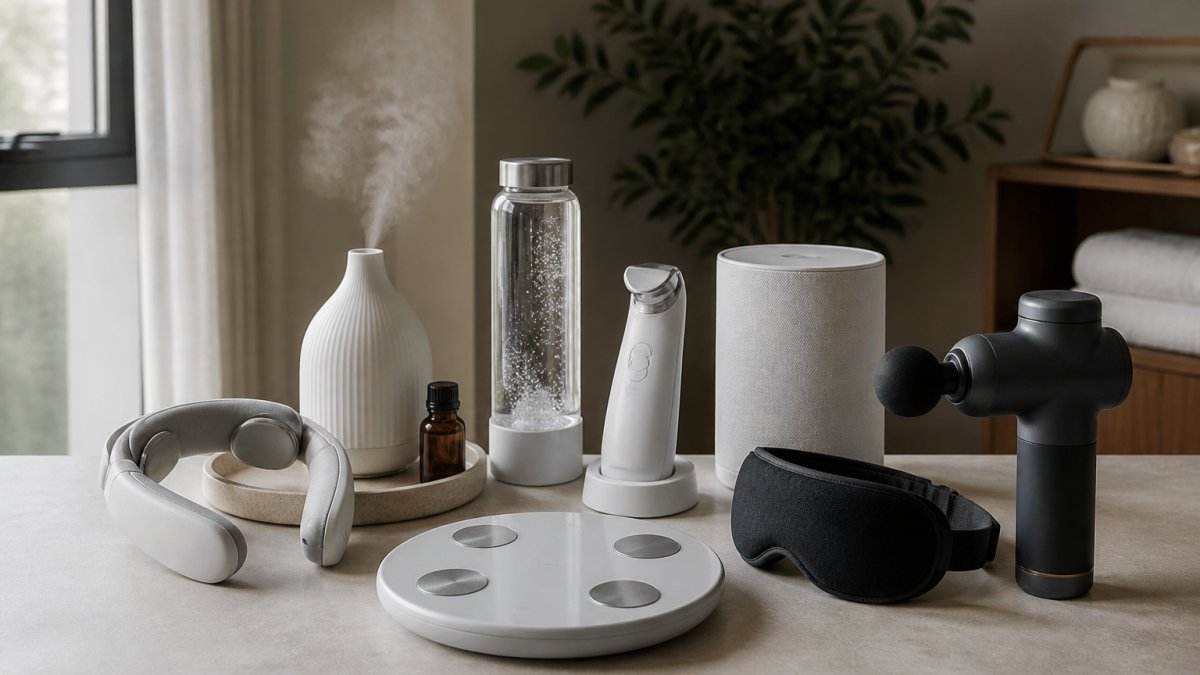
Table of Contents
- What Defines High Tech Home Wellness Gadgets
- Smart Sleep Gadgets That Transform Rest
- At-Home Recovery Devices for Active Wellness
- Red Light Therapy Devices for Home Optimization
- Smart Air Quality Monitors and Respiratory Wellness
- Fitness Tracking and Activity Monitoring at Home
- Privacy, Security, and Total Cost of Ownership
- Building Your Intentional Wellness Routine
- Frequently Asked Questions
Last Updated: October 16, 2026
What Defines High Tech Home Wellness Gadgets
High tech home wellness gadgets are devices designed to monitor, track, and optimize your health from the comfort of your home. These tools blend sophisticated sensors, artificial intelligence, and connected ecosystems to deliver real-time insights into sleep quality, activity levels, stress, recovery, and overall wellness.
The wellness technology market has evolved dramatically. What once required clinical equipment now fits on your wrist, nightstand, or bathroom scale. At Let's Elevate Enterprises LLC, we've curated a selection of high tech home wellness gadgets for those serious about optimizing their daily routines.
These devices share common characteristics: they use advanced sensors to collect biometric data, employ AI to interpret patterns, and sync seamlessly across platforms. The best ones focus on actionable insights rather than vanity metrics. They measure what matters, sleep architecture, heart-rate variability, muscle recovery, not just step counts.
Smart Sleep Gadgets That Transform Rest
Sleep tracking and environmental optimization form the foundation of any serious wellness routine. The devices in this category monitor sleep cycles, environmental conditions, and circadian rhythm alignment to help you achieve deeper, more restorative sleep.
Sleep tracking and environmental optimization
Sleep trackers work by monitoring movement, heart rate, and sometimes respiratory patterns throughout the night. They distinguish between light sleep, deep sleep, and REM stages, giving you a clear picture of sleep quality. Environmental monitors track temperature, humidity, light exposure, and air quality, factors that directly influence how well you sleep.
A common mistake is assuming better sleep tracking means better sleep. The real power comes from acting on the data. If your tracker shows you're getting only 45 minutes of deep sleep, you can adjust your bedroom temperature, reduce evening light exposure, or shift your bedtime earlier.
The best smart sleep gadgets integrate with your broader wellness ecosystem. They sync with your phone, provide weekly summaries, and highlight patterns over time. Look for devices that measure actual sleep stages, not just time in bed.
Circadian rhythm alignment tools
Your circadian rhythm, the 24-hour biological cycle that governs sleep, hormone release, and energy levels, is the master controller of your health. Devices that align your circadian rhythm work by delivering the right light exposure at the right times of day.
Sunrise alarm clocks simulate a natural dawn, gradually increasing light intensity over 30 minutes before your alarm sounds. This primes your body to wake naturally. Evening light filters reduce blue light exposure as the sun sets, signaling your body to produce melatonin. Some advanced devices use red light therapy combined with timing protocols to optimize both morning alertness and evening wind-down.
Research shows that circadian alignment affects far more than sleep quality (Exploring the Role of Circadian Rhythms in Sleep and Recovery: A Review Article). It influences metabolism, mood, immune function, and cognitive performance.
At-Home Recovery Devices for Active Wellness
Recovery technology has shifted from passive rest to active intervention. These devices accelerate muscle repair, reduce inflammation, and restore mobility, essential for anyone serious about fitness or managing physical stress.
Muscle relief and tissue recovery
Percussive massage devices deliver rapid, targeted vibrations to muscle tissue, increasing blood flow and reducing soreness. They're most effective within 24-48 hours after intense exercise. Compression boots use sequential inflation to push metabolic waste out of your legs, speeding recovery and reducing swelling. Many athletes use these for 20-30 minutes post-workout.
Foam rolling devices and vibration platforms offer similar benefits through different mechanisms. Vibration platforms oscillate your entire body, activating stabilizer muscles and improving proprioception. Foam rolling with electric assistance applies consistent pressure while reducing the physical effort required, making it accessible for longer sessions.
The key to recovery technology is consistency and timing. A percussive device used randomly won't deliver results. Used strategically after workouts or during rest days, these tools noticeably reduce soreness and accelerate return to training.
Red light therapy and biohacking
Red light therapy uses wavelengths between 600-1000 nanometers to penetrate skin and stimulate cellular energy production. The mechanism is straightforward: red light increases ATP (cellular energy) production in mitochondria, which accelerates healing and reduces inflammation.
Red light panels designed for home use range from small targeted devices to full-body panels. Consistent use, typically 10-20 minutes daily, shows benefits for muscle recovery, skin health, and joint function. Many people use red light therapy panels in the morning to support circadian rhythm alignment, then again after workouts to accelerate recovery.
A practical approach is combining red light therapy with other recovery tools. Use it while wearing compression boots or immediately after a percussive massage session. The combination amplifies benefits beyond what any single tool delivers alone.
Red Light Therapy Devices for Home Optimization
Red light therapy devices have become centerpieces of intentional wellness routines. Unlike recovery-focused red light tools, these devices target broader health optimization including skin health, mood, and cellular function.
Standalone red light therapy panels come in various sizes and power outputs. Smaller handheld devices cost less but deliver lower intensity. Full-body panels are more expensive but allow you to treat larger areas simultaneously.
Research on red light therapy shows benefits across multiple domains. The evidence quality varies, some applications have stronger backing than others. What matters is choosing devices from manufacturers with transparent specifications about wavelength and power output.
Many people integrate red light therapy into existing routines. Use it while reading, working at your desk, or during your morning meditation. This removes the friction of adding another time commitment.
Smart Air Quality Monitors and Respiratory Wellness
Air quality directly impacts sleep quality, cognitive function, and respiratory health. Smart air quality monitors measure CO2, particulate matter, humidity, and volatile organic compounds, giving you real-time data about your breathing environment.
High CO2 levels in bedrooms are surprisingly common, especially in well-sealed modern homes. Elevated CO2 disrupts sleep quality and reduces cognitive performance.
Humidity monitoring matters equally. Too-dry air irritates airways and disrupts sleep. Too-humid air promotes mold and dust mites. Smart monitors show you exactly where you stand, allowing you to adjust humidifiers or dehumidifiers with precision.
The best smart air quality monitors integrate with your broader wellness ecosystem. They provide historical data showing how air quality changes throughout the day and across seasons. This context helps you identify patterns and make targeted improvements.
Fitness Tracking and Activity Monitoring at Home
Activity tracking has evolved beyond step counting. Modern fitness tracking devices measure heart-rate variability, recovery status, training load, and readiness for intense exercise. This gives you data-driven guidance about when to push hard and when to prioritize recovery.
Smart rings and wearable devices track activity continuously without the bulk of traditional smartwatches. They monitor sleep, stress, activity, and heart-rate variability simultaneously. The advantage is unobtrusive monitoring, you wear them without thinking about it.
Home fitness equipment with integrated tracking, smart mirrors, connected treadmills, and weighted equipment with embedded sensors, transforms your workout space into a personalized training facility.
The practical value comes from using this data to adjust your training. If your heart-rate variability is low and recovery score is poor, that's a signal to reduce intensity and prioritize sleep.
Privacy, Security, and Total Cost of Ownership
Before investing in multiple wellness devices, understand the privacy implications and true long-term cost. Health data is sensitive. Devices that sync to cloud platforms require transparent data handling policies.
Understanding health data protection
Your health data is valuable and vulnerable. Devices that track sleep, heart rate, stress, and activity patterns create detailed profiles of your physical and mental state. This data should never be sold to third parties or used for targeted advertising.
When evaluating wellness devices, check the manufacturer's privacy policy explicitly. Look for these markers: data encryption in transit and at rest, clear opt-out options for cloud syncing, and explicit statements that health data won't be shared with advertisers or health insurance companies. Some manufacturers allow local-only data storage, meaning your information never leaves your home, a significant privacy advantage.
Many people don't realize that health data can be used against you. Insurance companies, employers, and marketers all have incentives to access this information. Choose manufacturers with strong privacy commitments and transparent data practices.
Evaluating long-term value and ecosystem compatibility
The true cost of wellness technology extends far beyond the initial purchase. Consider ongoing subscription fees, battery replacements, device updates, and ecosystem compatibility.
A smart sleep gadget costing $200 might require a $10 monthly subscription for full features. Over five years, that's $600 in additional costs. Some devices become obsolete when manufacturers discontinue software support. Others require replacing batteries annually.
Ecosystem compatibility matters significantly. If you choose devices from different manufacturers, they may not sync together. You'll manage multiple apps, duplicate data, and lose the integrated insights that make wellness technology valuable. The best approach is choosing a core ecosystem, then adding compatible devices.
Calculate total cost of ownership before committing. A $150 device with $15 monthly fees costs $1,050 over five years. A $400 device with no subscriptions costs $400 over the same period.
Building Your Intentional Wellness Routine
The most sophisticated wellness gadgets deliver zero results if they're not integrated into a consistent daily routine.
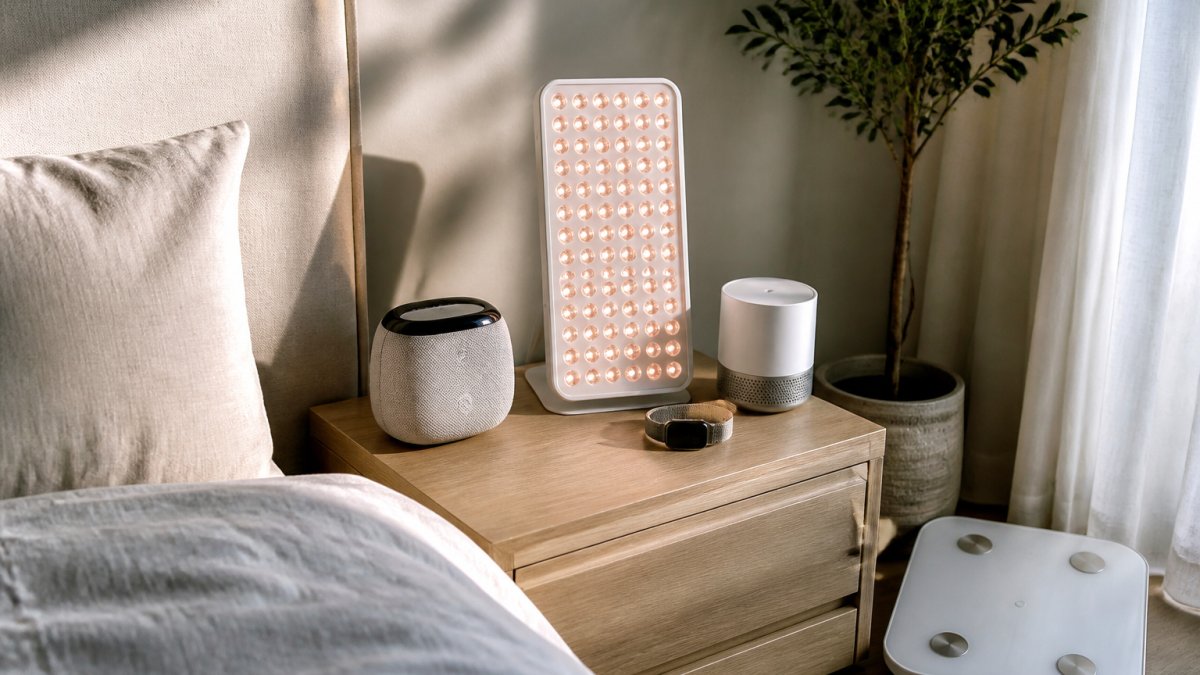
Start by identifying your primary wellness goal. Are you optimizing sleep? Accelerating recovery? Improving stress resilience? Managing activity levels? Choose one goal and select 2-3 devices that directly address it.
Next, establish a non-negotiable daily routine. Wear your sleep tracker every night. Check your morning readiness score before deciding on workout intensity.
Track your baseline for two weeks before making changes. How's your sleep quality? What's your average heart-rate variability? How much deep sleep are you getting?
Finally, adjust one variable at a time.
The real power of high tech home wellness gadgets emerges when they become invisible parts of your routine, devices you use without thinking about them, generating insights that guide your daily decisions.
At Let's Elevate Enterprises LLC, we believe that intentional wellness technology selection transforms your daily routine.
Frequently Asked Questions
What should I look for when choosing the best high tech home wellness gadgets?
Prioritize devices that measure what matters to your goals: sleep quality, heart-rate variability, activity levels, or stress markers. Verify that the device integrates with platforms you already use, offers transparent data privacy policies, and has genuine peer reviews from long-term users. Check whether the manufacturer is an authorized retailer and provides authentic warranty support. Start with one category, sleep or recovery, rather than buying everything at once, so you can evaluate actual impact over 4-6 weeks.
Are smart sleep gadgets and wearable devices better than at-home recovery devices?
They serve different purposes. Smart sleep gadgets optimize your sleep environment and track rest quality, addressing the foundation of wellness. At-home recovery devices target muscle tension, circulation, and tissue repair during waking hours. The most effective approach combines both: quality sleep enables better recovery, and active recovery supports deeper rest. Your choice depends on which wellness gap you want to address first, poor sleep, muscle tension, or both.
How much does a complete home wellness technology setup cost?
Total investment varies widely based on device types and brands you select. Entry-level setups focusing on one category (sleep or recovery) start lower, while comprehensive systems spanning sleep tracking, air quality monitoring, red light therapy, and activity tracking require a larger commitment. Rather than estimating, visit Let's Elevate Enterprises LLC's website to explore current pricing for curated bundles and individual devices that match your budget and wellness priorities.
Can high tech home wellness gadgets actually help me build a better daily routine?
Yes, but only if you use the data intentionally. Wearable health data and continuous monitoring provide feedback that reveals patterns, which sleep conditions help you feel best, how stress affects your heart-rate variability, which recovery methods reduce soreness. Use these insights to adjust your routine: shift your bedtime, try different breathing exercises, or schedule recovery sessions. The technology is the mirror; your consistent action based on that feedback is what transforms your routine.