how-to
How to Choose a Home Sauna Device
Last Updated: October 30, 2026
Quick Summary
The right home sauna device depends on the heat you want, the room you have and the power you can supply. Choose between traditional, infrared or portable types first, then confirm the electrical capacity, ventilation and clearances before you buy. Compare total cost of ownership rather than sticker price.
- Choose heat type first: traditional saunas run hotter, while infrared units heat the body more gently.
- Measure floor area, ceiling height and door clearance before shortlisting any model.
- Confirm heater amperage and voltage with the manufacturer and check your electrical panel capacity.
- Ask a local building department which permits apply to your sauna installation.
- Compare all-in quotes, energy use and warranty coverage rather than the purchase price alone.
Table of Contents
- Choosing a Sauna Type: Traditional, Infrared or Portable
- Infrared vs Traditional Sauna: Which Heat Source Fits Your Home
- Home Sauna Size and Capacity: Measuring Your Space
- Home Sauna Installation Requirements: Electrical, Ventilation and Building Checks
- Home Sauna Cost: Purchase Price, Energy Use and Maintenance
- Health Claims, Contraindications and Accessibility Checks
- Booking Your Consultation to Narrow Down Your Home Sauna Choice
- Frequently Asked Questions
Choosing a Sauna Type: Traditional, Infrared or Portable
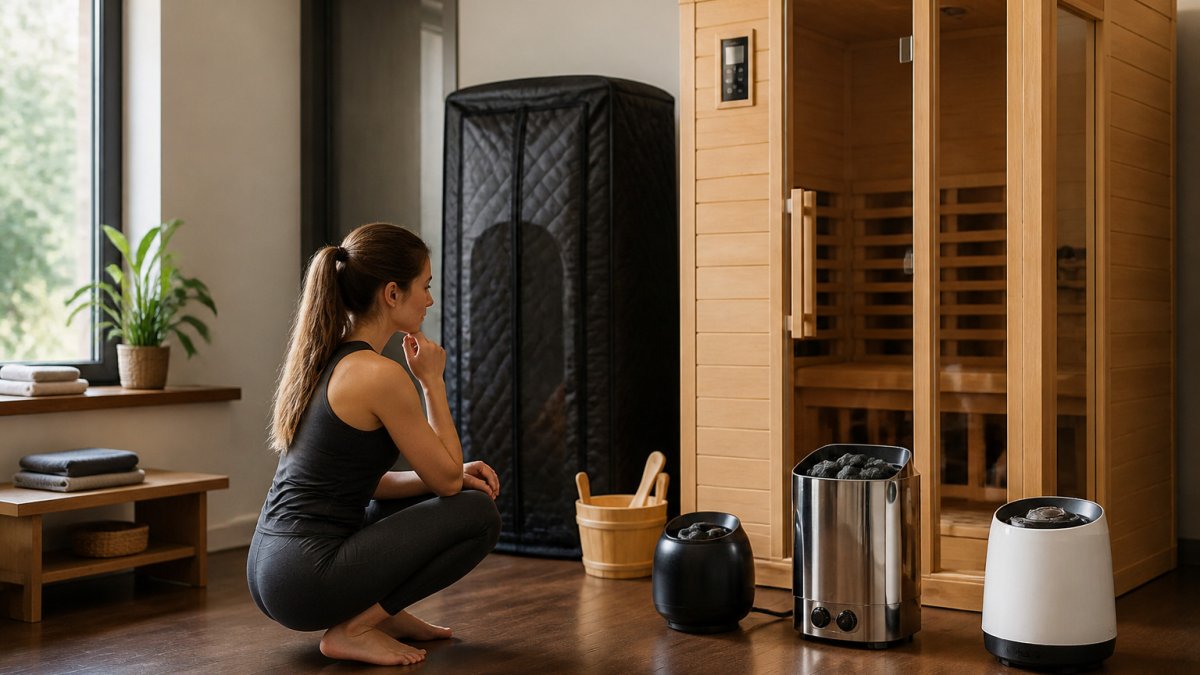
Picking the right home sauna device starts with one decision: what kind of heat you want, since the right home sauna device depends on how you like to sweat. Traditional saunas heat the air and typically run hotter. Infrared units warm the body directly at lower air temperatures. Portable options, such as sauna tents and compact cabins, suit tight spaces and renters. Each type fits a different routine, budget and room, so start with the experience you want, then work back to the hardware.
Comparing Heat Experiences and Temperature Ranges
Heat experience is the biggest difference between these devices. Traditional saunas usually run hotter than infrared units. Infrared models heat the body more gently. Check the temperature range of any unit you consider, and confirm whether its temperature control is adjustable or fixed. Adjustable control matters if several people with different heat tolerances will use the same device.
Infrared vs Traditional Sauna: Which Heat Source Fits Your Home
For most buyers, the heat source decides the rest of the purchase. A traditional sauna depends on a heater that warms stones or air, while an infrared sauna uses panels that emit radiant heat. Infrared units generally need less electrical capacity than traditional units. Traditional units reward users who want steam-like, high-heat sessions. Infrared units suit users who prefer longer, lower-temperature sessions.
Selecting a Heater or Power Source
Heater choice shapes running cost, installation and maintenance. Electric heaters are a common choice for home units. Wood-burning heaters give a traditional feel but require a chimney or flue, clearance from combustibles and regular ash removal. Confirm the power source before buying, because a unit that needs a dedicated circuit can require an electrician. Watch out: a wood-burning heater installed without proper clearance is a fire risk, so treat clearance requirements as non-negotiable.
Home Sauna Size and Capacity: Measuring Your Space
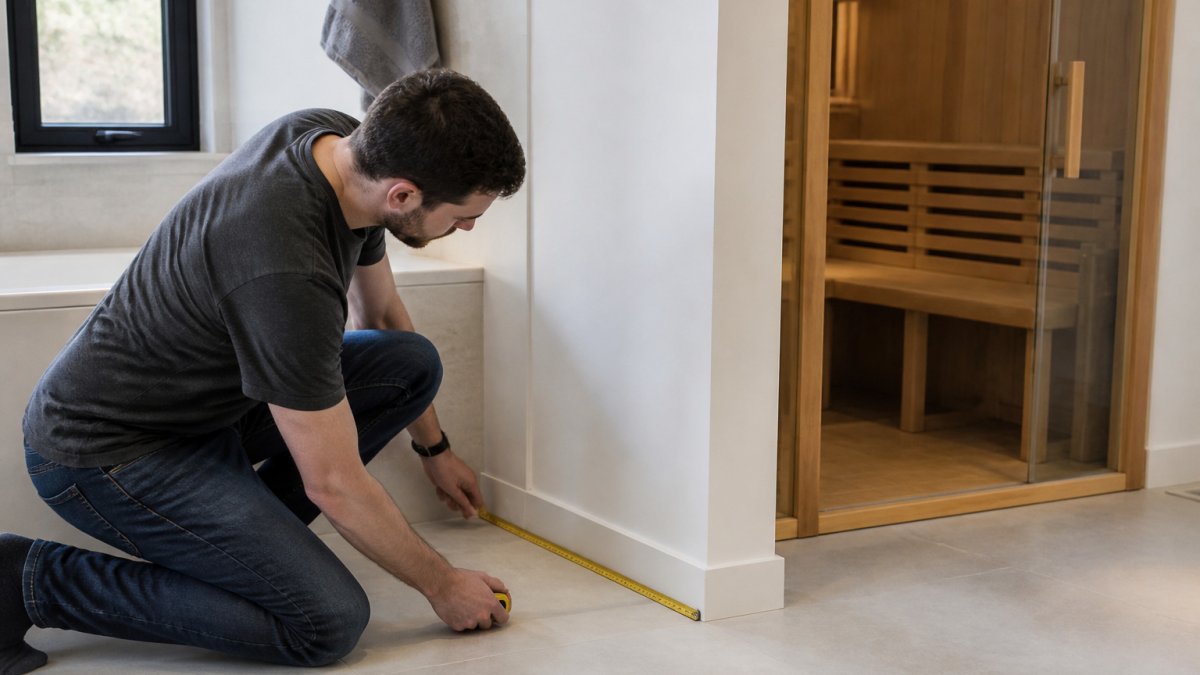
Measure your space before you shortlist any model. Record the floor area, ceiling height and the clearance needed around the door and heater. A one-person sauna needs far less room than a unit built for three or four people. Allow extra space for the door to swing and for a bench or seat to sit comfortably. Outdoor units need the same measurements plus a flat, level base.
Sauna Design, Installation Location and Wood Selection
Design and location affect both comfort and durability. Common wood choices for sauna construction include cedar, hemlock and aspen. Indoor and outdoor installations have different requirements, so consider where the unit will be placed.
Home Sauna Installation Requirements: Electrical, Ventilation and Building Checks
Installation is where many home sauna projects stall, and it is the part of the buying decision most product pages skip. Before you order, work through the four checks below in order: electrical capacity, ventilation, clearances, and permits. Each one can change which device you can actually install.
Electrical capacity and circuit requirements
Electric sauna heaters vary in the electrical capacity they require. Check each unit's amperage and voltage requirements with the manufacturer before you buy.
Before you shortlist a model, do three things:
- Find your electrical panel and note the amperage of the main service and any open breaker slots.
- Note whether the intended location has an existing 240-volt outlet or only standard 120-volt receptacles.
- Ask the manufacturer for the unit's amperage, voltage, and whether a dedicated circuit is required.
If the panel is full, or the run from the panel to the sauna location is long, the electrical work can become a meaningful part of the project. A licensed electrician can confirm circuit capacity and whether your service can support the load.
Ventilation and moisture management
A sauna produces heat and moisture, and both need somewhere to go. Good airflow controls humidity, keeps indoor air fresh, and protects the surrounding structure from prolonged damp. This matters most in small bathrooms, basements, and closets, where air can stagnate.
A practical checklist:
- Confirm the unit has an intake and exhaust vent, or that the room can be ventilated another way.
- Check whether the manufacturer specifies vent locations and minimum vent sizes.
- Plan for moisture-tolerant finishes on nearby walls and floors.
- Avoid enclosing the unit in a sealed, unventilated closet.
Clearances and floor loading
Clearance requirements protect combustible materials from the heater and give the door room to open safely. Wood-burning heaters in particular need strict clearance from combustibles and a chimney or flue. Electric heaters also have manufacturer-specified clearances that are easy to overlook.
Also confirm floor loading. A filled sauna with a heater, benches, and occupants is heavy, and upper-floor or deck installations may need structural review. Note the unit's filled weight and the footprint, then compare against what the floor or deck is rated to support.
Permits and when to call a professional
Building rules vary by location, but common triggers for a permit or inspection include new electrical circuits, structural changes, and outdoor structures. Before you order:
- Call your local building department and ask what permits, if any, apply to a sauna installation.
- Ask whether the work requires a licensed electrician or contractor.
- Confirm whether outdoor units need a foundation, drainage plan, or setback from property lines.
A pre-purchase installation checklist
Use this to compare devices on installability, not just features:
- Heater amperage, voltage, and circuit type confirmed with the manufacturer
- Electrical panel capacity checked, ideally by a licensed electrician
- Ventilation intake and exhaust requirements confirmed
- Heater and door clearances measured against the intended location
- Filled weight compared against floor or deck capacity
- Local permit and inspection requirements confirmed
- Professional installer or electrician identified if needed
If any box cannot be checked, resolve it before you commit. A device that fits your room and your panel is worth more than one that fits only your budget.
Before you order, work through these four checks in order, since each one can change which device you can actually install.
| Check | What to confirm | Why it matters |
|---|---|---|
| Electrical capacity | Heater amperage and voltage | Determines whether a dedicated circuit is needed |
| Ventilation | Intake and exhaust vents | Controls heat, moisture and stale air |
| Clearances | Heater and door clearances | Protects combustibles and lets the door open safely |
| Permits | Local permit and inspection rules | Avoids ordering a unit you cannot legally install |
Home Sauna Cost: Purchase Price, Energy Use and Maintenance
Most sauna buying guides stop at the sticker price. That is the smallest part of what you will actually spend. A more useful approach is to estimate total cost of ownership across five buckets: purchase, installation, energy use, maintenance, and replacement. Comparing devices on all five will change which unit looks like the better deal.
1. Purchase price
Purchase price depends on size, heater type, materials, and delivery. Rather than relying on general estimates, request a current quote for each shortlisted model and confirm what it includes: heater, controls, benches, door, delivery, and any required accessories. A low headline price that excludes the heater or controls is not comparable to an all-in quote.
2. Installation and electrical work
Installation is the cost most often underestimated. Depending on your situation, it can include:
- New electrical circuit and wiring run by a licensed electrician
- Permit and inspection fees
- Assembly or professional installation labor
- A level base, foundation, or drainage work for outdoor units
- Ventilation work if the room lacks adequate airflow
Get these quoted separately. A unit that needs a new dedicated circuit and a long wiring run can cost meaningfully more to install than one that works on an existing circuit.
3. Energy use per session
Energy cost depends on heater wattage, session length, heat-up time, and local electricity rates. To estimate it:
- Find the heater's wattage.
- Estimate hours of use per session, including heat-up time.
- Convert to kilowatt-hours (watts ÷ 1,000 × hours).
- Multiply by your local electricity rate.
Energy use per session depends on the heater, so compare each unit's wattage and heat-up time.
4. Maintenance and consumables
Ongoing costs include wood treatment or sealing, heater servicing, replacement parts, and cleaning supplies. Wood-burning heaters add ash removal and chimney or flue maintenance. Ask each manufacturer what routine maintenance is required and whether parts are readily available.
5. Replacement and warranty
Warranty terms affect long-term cost. Compare warranty length and what it covers, heater, controls, structure, and labor, and check whether parts are stocked locally. A cheaper unit with a short warranty and hard-to-source parts can cost more over several years than a slightly pricier unit with better coverage.
A total-cost worksheet
For each shortlisted model, fill in:
- Purchase price (all-in quote)
- Electrical work quote
- Installation or assembly labor
- Permit fees
- Estimated annual energy cost
- Estimated annual maintenance cost
- Warranty length and coverage
- Expected replacement timeline for heater and parts
The model with the lowest total across these lines, not the lowest purchase price, is usually the better long-term buy.
Health Claims, Contraindications and Accessibility Checks
Sauna use is popular, and people should understand its limits. Heat exposure is not suitable for everyone. People who are pregnant, have heart conditions, low or high blood pressure, or who take medications that affect heat tolerance should consult a physician before use. Accessibility matters too: check door width, bench height, handrails and step-in access if users have mobility limits.
Booking Your Consultation to Narrow Down Your Home Sauna Choice
Once you have a shortlist, a consultation can help you match a device to your room, power supply and heat preference. You can reach out through the contact page to ask about devices and installation details before you commit. For a structured self-check of electrical, ventilation and building considerations, the installation checklist is a useful place to start. Use your measurements, power details and budget to narrow the field before you buy.
Frequently Asked Questions
What type of sauna is best for home use?
The best type depends on your space, budget and preferred heat experience. Traditional saunas suit people who want classic dry heat. Infrared saunas use radiant panels, run at lower air temperatures and heat up faster. Portable saunas suit renters or small spaces but usually offer less capacity and durability. Compare temperature range, heat-up time, space and power requirements before deciding, and check the warranty and maintenance needs of any model you consider.
Is an infrared or traditional sauna better for a home?
Neither is better for everyone. Traditional saunas reach higher air temperatures, which many users prefer for the classic heat experience. Choose based on the heat experience you want, the electrical capacity you have and how much maintenance you are willing to do.
How much space do you need for a home sauna?
Measure the available floor area and allow clearance around the unit for access and airflow. Ceiling height should allow comfortable seating and head clearance, and the location must support the required electrical circuit and ventilation. Confirm final dimensions with the manufacturer before ordering.
Do home saunas need special electrical wiring?
Electric home saunas may require a dedicated circuit. A licensed electrician should verify the circuit and any protection required by your local electrical code. Check the manufacturer's specifications before installing any model.
